
OpenAI unveiled Orion on October 10. This next-gen model isn’t just bigger; it’s smarter. Building on last year’s o1 series, Orion excels in complex reasoning for math, coding, and multi-step problem-solving. Reports suggest it surpasses GPT-4o in benchmarks by up to 20%. Trained on large datasets using improved “chain-of-thought” techniques, it’s suitable for real-world applications like scientific research and automated planning.
Why it’s significant: This could change industries from finance to healthcare, where precise decision-making is crucial. Early adopters are integrating it via Azure, but concerns about “AI cannibalism” from over-reliance on synthetic data remind us that scaling has limits. If you’re experimenting with agents, Orion is the new place to be!
2. Nvidia’s NVLM 2.0: Multimodal Magic Crushing Closed-Source Rivals
Nvidia launched NVLM 2.0 on October 8. This open-source model handles text, images, and video with top-notch accuracy. It outperforms GPT-4 and Claude 3.5 in multimodal tasks, is optimized for edge devices, and offers 30% faster inference. The release includes tools for developers to fine-tune on custom data, making advanced AI accessible to more people.
An interesting angle: Nvidia’s shift to software complements their Blackwell GPUs, which have finally started shipping after last year’s delays. This model’s open nature is triggering a wave of innovations from independent developers, like custom AR apps or real-time analytics. If you need more power, pair it with nuclear-backed data centers for sustainability benefits.
3. Meta’s Movie Gen Goes Public: Text-to-Video with Audio in Seconds
After teasing it during research phases, Meta launched Movie Gen publicly on October 11. This 30B-parameter model generates 1080p videos up to 16 seconds long, complete with synced sound effects and music from simple prompts. It supports editing, personalization using user images, and even creates ambient noise for engaging storytelling.
Impact alert: Creators are excited about its potential for quick prototypes in film and marketing. However, Meta emphasizes ethical use to prevent deepfake misuse. Integrated with Ray-Ban smart glasses, the future of augmented content just became louder and more vivid.
4. Anthropic’s Claude 4.0: AI That “Uses” Computers Like a Pro
On October 9, Anthropic pushed boundaries with Claude 4.0’s “computer use” feature. This allows the AI to navigate screens, click, type, and interact with software like a human. It can automate workflows in browsers and debug code in IDEs. This marks a step toward true general intelligence, though it’s still in beta with safeguards against errors.
A game-changer for productivity: Businesses are considering it for tasks like data entry or app testing, which could lessen human oversight. But regulators are taking note, recalling last year’s EU AI Act expansions, as they assess risks in autonomous systems. Pro tip: Start small to avoid those annoying hallucinations!
5. Global AI Regs Tighten: US Memo on National Security and EU Code of Practice
On October 12, the US issued an updated national security memo. This memo requires AI guardrails for defense, including bans on biased tracking and annual risk reports for bio/nuclear threats. Meanwhile, the EU has finalized its AI Act code of practice, drafted by experts, focusing on transparency and high-risk assessments. It is set to roll out fully by 2026.
Why should you care? These actions balance innovation and safety, impacting everything from startups to large companies. California’s 2024 laws on deepfakes and privacy are already shaping global standards. Investments in nuclear energy, such as the recent Amazon and Google deals, aim to address AI’s energy needs.

6. IBM’s Granite 4.0: Enterprise AI for Data-Heavy Sectors
IBM introduced Granite 4.0 on October 7 at TechXchange. This version is optimized for healthcare, finance, and supply chains, featuring superior analytics and automation. It supports over 116 programming languages and has features for trustworthy outputs. Adoption in the utilities sector has grown by 81%, focusing on safety and efficiency.
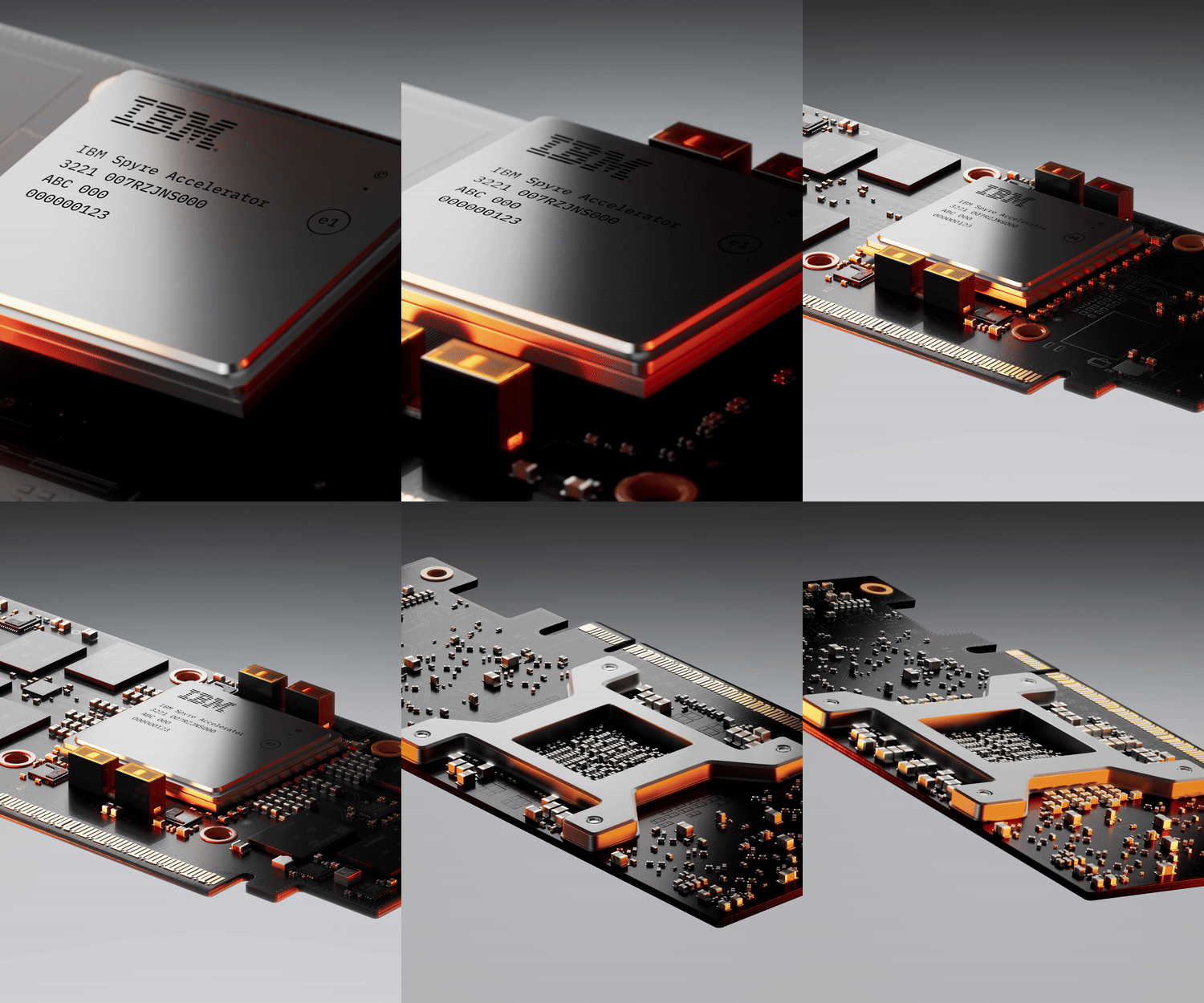
Bonus: The US Treasury’s AI fraud detection has achieved over $5B in recoveries this fiscal year, proving the real-world ROI of enterprise AI. If your organization is increasing investments, Granite’s modular features could help reduce costs by 40%.
Wrapping Up: The AI Pulse Accelerates
October 2025 is all about integration. AI is not just thinking anymore; it is acting, creating, and ensuring safety. With hefty investments like xAI’s $6B push and tools such as Google’s expanded Gemini, we are close to widespread use of agents. However, challenges remain, including energy demands, ethical issues, and the need for better data. Stay tuned as quantum-AI hybrids approach the next frontier.
What do you think about these developments? Share your thoughts below or subscribe for monthly insights. Keep building responsibly; the future of AI is being shaped now.