
Goals sound simple in theory. You decide what you want, make a plan, and go after it. But real life rarely moves in such a clean line. Most people do not fail because they never wanted success. They fail because their goals were too vague, too heavy, too disconnected from daily action, or too easy to abandon when life became busy.
That is why learning how to set goals and achieve them matters so much. A goal is not just a wish written in nicer language. A real goal needs structure, direction, and follow-through. It needs to be clear enough to guide your actions and flexible enough to survive real life.
At pixmerce.com, we look at growth in a practical way. A strong goal should not just sound good in your head. It should help you decide what to do today, what to ignore, and how to measure whether you are actually moving forward. Once you understand how to set goals and achieve them, you stop treating progress like luck and start building it with intention.
This guide is written for real people with real responsibilities. You may be trying to improve your career, your studies, your health, your finances, your habits, or your confidence. You may already have goals but struggle to stick to them. Or maybe you keep setting new ones and watching them fade after a few weeks. Either way, this article will help you build a stronger approach.

Why Most Goals Fail
Many goals fail before the hard part even begins. The problem often starts at the setup stage. A person says they want to get fit, save money, grow a business, become more disciplined, or learn a new skill. But the goal stays broad. It sounds nice, yet it gives no clear direction.
That is where frustration begins. You cannot follow through on something that has no shape. Current goal-setting guides from Asana, Coursera, and Atlassian all emphasize that strong goals should be clear, measurable, realistic, and time-bound rather than vague intentions.
People also fail because they make goals emotionally exciting but practically weak. They focus on the outcome and ignore the process. They say they want the result, but they do not build the routine that would actually lead to it.
Another common reason goals fail is overload. People try to change too much too fast. They want a new routine, a better body, more money, stronger focus, and perfect discipline all at once. That level of pressure often creates a burst of energy followed by a crash.
If you want to understand how to set goals and achieve them, the first lesson is this: good goals do not depend on hype. They depend on clarity and repeatable action.
The Difference Between a Wish and a Goal
A wish is something you want. A goal is something you define.
A wish sounds like this:
- I want to be more successful
- I want to get healthy
- I want to stop wasting time
- I want to make more money
- I want to grow my skills
A goal sounds different:
- I want to walk 30 minutes five days a week for the next 8 weeks
- I want to save a set amount every month until I reach a target
- I want to complete a certification by a specific date
- I want to publish one article every week for three months
That difference matters because vague ambition creates emotional energy, but clear direction creates movement.
Asana’s current SMART goals guide explains that breaking a goal into smaller, manageable parts makes it easier to track and achieve. Coursera’s goal-setting guidance uses the same SMART structure: specific, measurable, achievable, relevant, and time-bound.
So if you keep asking yourself how to set goals and achieve them, begin by checking whether your goal is truly a goal or still just a wish in a nice outfit.
Start With the Right Kind of Goal
Not every goal serves the same purpose. Some goals are about outcomes. Some are about process. Some are short-term. Some are long-term.
Asana’s recent goal resources describe several types of goals, including time-bound, outcome-oriented, and process-oriented goals.
That is useful because many people choose the wrong type of goal for the stage they are in.
Outcome goals
These focus on the result.
Examples:
- earn a promotion
- lose a certain amount of weight
- reach a savings target
- launch a business
Process goals
These focus on the actions that lead to the result.
Examples:
- study for 45 minutes every day
- work out four times a week
- save part of each paycheck
- contact three clients every weekday
Time-based goals
These focus on deadlines and milestones.
Examples:
- finish a course by June
- publish a website in 30 days
- complete a portfolio before interviews start
A strong system often combines all three. You choose the result, define the behavior, and attach a time frame.
That combination is a major part of how to set goals and achieve them because it stops you from obsessing over the finish line while ignoring the road that leads there.
Use SMART Goals the Right Way
SMART goals are popular because they force vague goals to become clearer. The framework is still widely used in up-to-date guides from Asana, Coursera, and Atlassian.
SMART stands for:
Specific
What exactly are you trying to do?
Measurable
How will you know whether you are making progress?
Achievable
Is it realistic based on your life, time, and current situation?
Relevant
Does it actually matter to your larger priorities?
Time-bound
By when do you want to complete it?
A weak goal says:
“I want to get better at writing.”
A stronger goal says:
“I want to write and publish one blog post every week for the next 12 weeks.”
The second version gives you something to follow. It removes confusion. It makes review possible.
Still, SMART goals are not magic. They help you define the goal, but they do not do the work for you. That is why learning how to set goals and achieve them requires more than just writing a polished sentence. You also need systems, routines, and review.
Know Why This Goal Matters
A goal with no emotional reason behind it usually fades when the first hard week arrives. You may start with excitement, but excitement is unreliable. Meaning lasts longer.
Before you commit to any goal, ask:
- Why do I want this?
- What changes if I achieve it?
- What pain or frustration am I trying to leave behind?
- What would improve in my life if I stayed consistent?
- Is this my goal, or am I copying someone else?
Coursera’s goal-related guidance repeatedly connects good goal setting to broader personal or career direction, which is another way of saying your goal should fit your bigger picture.
This matters because how to set goals and achieve them is not only about technique. It is also about attachment. If the goal matters to you deeply enough, it becomes easier to come back to it when motivation drops.
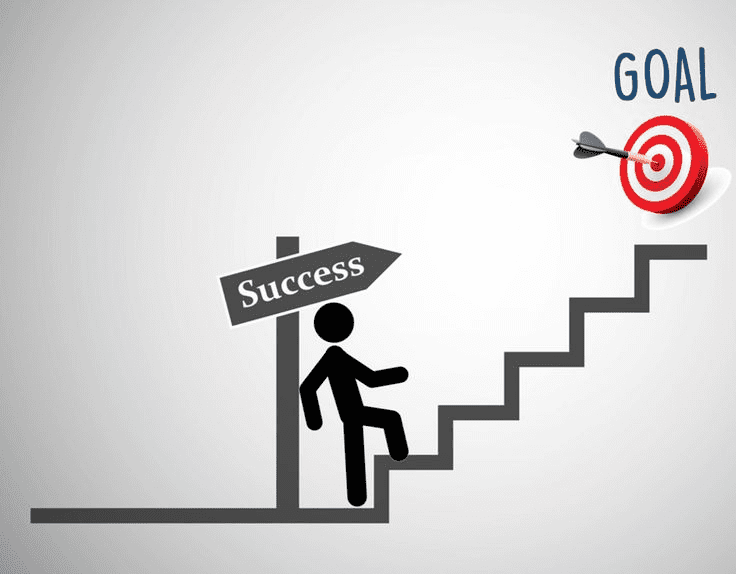
Break Big Goals Into Stages
Big goals create pressure when they stay too large. “Start a business,” “change my life,” “get in shape,” or “become successful” can feel so broad that they push people into delay.
That is why one of the most useful parts of how to set goals and achieve them is stage-building.
Instead of:
- start a business
Break it into:
- research the niche
- define the offer
- choose a name
- create the basic website
- contact first potential clients
- make first sale
Instead of:
- get fit
Break it into:
- walk four times a week
- improve sleep schedule
- reduce sugary drinks
- plan simple meals
- track workouts for one month
Instead of:
- become more disciplined
Break it into:
- wake up at the same time
- make a daily priority list
- remove one major distraction
- complete one key task before noon
Smaller stages reduce fear. They also make success visible sooner.
Asana’s SMART guide and Todoist’s goal-tracking guidance both emphasize breaking larger goals into manageable tasks and reviewing progress regularly.
Turn Goals Into Daily Actions
This is where many people lose progress. They choose a good goal, write it nicely, and then leave it floating above daily life. It never becomes part of the schedule.
A goal that is not translated into action stays abstract.
If your goal is to read more, when will you read?
If your goal is to save money, how much and when?
If your goal is to build a portfolio, what are you making this week?
If your goal is to improve your health, what changes today?
Todoist’s guidance on setting and tracking goals recommends building a dedicated goal tracker, using recurring due dates for habits, and running a weekly review to plan next steps.
That is a strong example of how to set goals and achieve them in real life. The goal has to enter the calendar, the task list, and the routine. Otherwise, it becomes something you “care about” but rarely touch.
Ask this every time
“What does this goal require from me this week?”
That question keeps the goal alive.
Focus on Fewer Goals at One Time
Ambition is good. Overloading yourself is not.
Many people sabotage themselves by trying to chase too many important changes at once. They want to improve health, money, work, studies, relationships, habits, and side projects all in the same season. That sounds driven, but it often leads to scattered effort.
If you want to learn how to set goals and achieve them, respect your limits. Choose fewer goals and give them more attention.
A good rule is to focus on:
- one major goal
- one supporting goal
- maybe one maintenance goal
For example:
- major goal: finish a certification
- supporting goal: build a study habit
- maintenance goal: keep walking four times a week
That is manageable. It lets you make progress without feeling pulled in ten directions.
Make the Goal Visible
What stays hidden gets forgotten.
This is simple, but it matters a lot. If your goal only lives in your head, daily life will bury it. Make it visible where you can see it.
That could mean:
- writing it in your notebook
- placing it on your wall
- setting a recurring reminder
- keeping it in your planner
- making it the top project in your task app
Todoist’s goal-setting content recommends recurring reminders and a weekly goal review so important goals do not disappear under daily noise.
A visible goal stays emotionally active. It reminds you that your day is supposed to point somewhere.
Build Systems, Not Just Excitement
Motivation helps you begin, but systems help you continue.
One of the most important lessons in how to set goals and achieve them is that success depends less on how fired up you feel and more on what your routine makes likely.
A system might include:
- a set time to work on the goal
- a checklist for recurring actions
- a weekly review
- a simple way to track progress
- fewer distractions around your work time
Atlassian’s goal-setting templates and software guidance both stress regular reviews, measurable benchmarks, and alignment between goals and daily work.
That kind of setup matters because it reduces the number of decisions you need to make. It becomes easier to continue even on average days.
Review Progress Every Week

A goal without review easily drifts.
Weekly review is one of the most underrated parts of how to set goals and achieve them. It helps you see what moved, what stalled, what got in the way, and what should happen next.
During a weekly review, ask:
- What progress did I make?
- What blocked me?
- What needs to happen next week?
- Is this goal still realistic?
- Do I need to adjust the plan without abandoning the goal?
Todoist’s goal-setting guidance specifically recommends a weekly goal review, and Atlassian’s goal-setting templates also emphasize reviewing and adjusting goals regularly.
That matters because goals rarely fail in one dramatic moment. They usually fade slowly through neglect. Review prevents that.
Expect to Adjust the Plan
People often think changing the plan means they failed. It does not. Sometimes it means they finally got honest.
You may realize:
- the timeline was too aggressive
- the goal was too broad
- the habit was unrealistic
- the schedule does not fit your life
- the approach is not working
That is not a reason to quit. It is a reason to refine.
Learning how to set goals and achieve them includes knowing when to stay committed to the destination but flexible about the route.
If your workout routine fails at 6 AM, maybe evenings work better.
If daily study is unrealistic, maybe five focused sessions a week are enough.
If the savings target is too high, maybe the monthly amount needs adjusting.
Flexibility keeps the goal alive.
Use Short-Term Goals to Support Long-Term Ones
Long-term goals matter because they give direction. Short-term goals matter because they create movement.
Asana and Coursera both connect long-term planning to shorter SMART steps that make large goals usable in day-to-day life.
For example:
Long-term goal
Launch a profitable freelance business within a year.
Short-term goals
- define services this month
- build a simple portfolio next month
- pitch five potential clients each week
- improve one core skill every quarter
This is a major part of how to set goals and achieve them. Big goals need smaller bridges. Otherwise they stay inspiring but inactive.
Make Progress Measurable
What gets measured gets clearer.
That does not mean everything has to become a spreadsheet. It means your goal should have signs of progress that you can recognize.
Examples:
- number of workouts completed
- amount saved
- lessons finished
- clients contacted
- pages written
- applications submitted
- hours studied
- habit streak length
Coursera and Asana both place strong emphasis on measurability inside the SMART framework.
This matters because how to set goals and achieve them becomes much easier when progress is visible. Visible progress creates evidence, and evidence strengthens commitment.
Use Identity to Strengthen Commitment
This part is simple but powerful.
Do not only ask, “What do I want to achieve?”
Also ask, “Who am I becoming while I work on this?”
Examples:
- not just “I want to write a book” but “I am becoming someone who writes regularly”
- not just “I want to get fit” but “I am becoming someone who takes care of my body”
- not just “I want better grades” but “I am becoming someone who studies with discipline”
- not just “I want more clients” but “I am becoming someone who shows up professionally”
Identity-based thinking helps because it keeps the process meaningful even before the result arrives.
It is another valuable part of how to set goals and achieve them because goals take time. If your identity changes while you wait for the outcome, progress feels more real.
Protect Your Goal From Distractions
Not every opportunity deserves your time. Not every request deserves yes.
One reason goals fail is that people do not protect them. They keep saying they care about the goal, but their schedule shows something else.
Protecting a goal may mean:
- saying no to low-value tasks
- reducing time-wasting apps
- creating focus blocks
- leaving extra room in your week
- avoiding goals that do not fit your current season
Todoist’s goal-setting article even recommends keeping an “avoid at all costs” list for goals you are not actively working on right now, which is a smart way to prevent overload.
That is a strong lesson in how to set goals and achieve them. Success is not only about what you choose to do. It is also about what you choose not to chase.
Stay Motivated Over the Long Term
Motivation will not feel the same every week. That is normal.
Long-term success depends less on staying constantly excited and more on learning how to continue when the goal feels ordinary. Asana’s long-term goals guide highlights the need to avoid common pitfalls and use strategies that support motivation over time.
Here are a few ways to stay engaged:
- celebrate milestones
- review why the goal matters
- make the process less boring
- study your own progress
- adjust the system before frustration becomes quitting
Atlassian also mentions regular reviews and measurable progress as part of effective goal management.
If you want to know how to set goals and achieve them, do not build a plan that only works when you are highly motivated. Build one that still works on average weeks.
Recover Quickly After Setbacks

No serious goal is achieved without interruption. Life happens. You get tired, distracted, discouraged, or pulled into other responsibilities. One missed day, week, or month does not automatically destroy the goal.
What hurts more is the story people tell afterward:
- I ruined the streak
- I failed again
- maybe I am not that type of person
- I should just start over later
A better response is:
- what happened?
- what needs to change?
- what is the next small step?
- how do I restart without drama?
This is a huge part of how to set goals and achieve them because recovery speed matters more than perfection.
Use Different Goal Levels
Todoist’s MTO framework for goals suggests thinking in levels such as minimum, target, and outstanding rather than reducing success to only one pass-or-fail number.
That idea can help a lot.
Example:
- minimum: work out twice a week
- target: work out four times a week
- outstanding: work out five times a week
Or:
- minimum: save a basic amount monthly
- target: save a stronger amount
- outstanding: save above the target in high-income months
This is useful because it makes your goal harder to abandon. Even if you do not hit the ideal version every week, you can still move forward.
That flexibility fits beautifully into how to set goals and achieve them because it keeps progress alive without lowering standards into meaninglessness.
Examples of Better Goal Setting
Sometimes examples make everything clearer.
Career goal
Weak: I want a better job.
Better: I want to update my CV, improve my portfolio, and apply to five relevant jobs every week for the next two months.
Study goal
Weak: I want better grades.
Better: I want to study math for 45 minutes five days a week and complete one past paper every weekend until exams begin.
Fitness goal
Weak: I want to get healthier.
Better: I want to walk 8,000 steps daily, strength train three times a week, and improve my sleep over the next 12 weeks.
Money goal
Weak: I want to save more.
Better: I want to save a fixed amount on the first day of each month and track spending every Sunday for six months.
Content goal
Weak: I want to grow my blog.
Better: I want to publish one high-quality article each week on pixmerce.com for the next 16 weeks and review performance monthly.
These examples show how to set goals and achieve them in a way that connects vision with action.
A Simple Goal-Setting Framework You Can Use
Here is a practical structure you can follow.
Step 1: Choose one meaningful goal
Pick something that matters and fits your current season.
Step 2: Write it as a SMART goal
Make it specific, measurable, achievable, relevant, and time-bound.
Step 3: Break it into milestones
What has to happen this month? This week?
Step 4: Put actions into your schedule
Do not leave the goal floating.
Step 5: Track visible progress
Use a notebook, app, or simple checklist.
Step 6: Review weekly
Adjust the process, not just your emotions.
Step 7: Stay with it long enough
Do not restart every time the process becomes less exciting.
This is one of the cleanest ways to practice how to set goals and achieve them without overcomplicating the whole thing.
Common Goal-Setting Mistakes to Avoid

Here are some patterns that quietly ruin progress:
- choosing goals that impress others more than they matter to you
- setting too many major goals at once
- keeping goals vague
- focusing only on outcomes
- not scheduling the work
- never reviewing progress
- expecting perfect consistency
- quitting after one bad week
- refusing to adjust the plan
- measuring nothing
The good news is that these mistakes are fixable. Awareness alone improves your chances.
What to Do When You Stop Caring About the Goal
Sometimes the issue is not laziness. Sometimes the goal really no longer fits.
Ask yourself:
- have my priorities changed?
- is this goal still relevant?
- do I dislike the effort or just the discomfort?
- did I choose this because I truly wanted it?
- should I revise the goal instead of abandoning growth completely?
Coursera’s career and development planning resources emphasize aligning goals to your bigger path, which supports the idea that goals should stay relevant to your direction, not just your mood.
That is an important part of how to set goals and achieve them. Commitment matters, but blind commitment to the wrong goal is not wisdom.
A Weekly Goal Reset for Real Life
Here is a practical weekly reset you can use.
Every Sunday or Monday, review:
- what did I finish?
- what moved forward?
- what stalled?
- what matters most this week?
- what is the next milestone?
- what should I remove or delay?
Then set:
- one main goal action
- one supporting action
- one check-in point
This keeps the goal connected to real life instead of becoming a motivational slogan.
Conclusion
Learning how to set goals and achieve them is not about writing big dreams in a notebook and hoping your future self becomes more disciplined. It is about choosing meaningful goals, shaping them clearly, breaking them down, putting them into your week, reviewing them honestly, and staying with them long enough for progress to build.
The people who achieve goals are not always the most talented or the most excited. Very often, they are simply the ones who keep showing up with a clearer process. They know what they are aiming for. They know what to do next. They measure progress. They adjust when life gets messy. And they come back quickly after setbacks.
At pixmerce.com, we believe strong growth begins when goals stop being vague hopes and start becoming practical commitments. Once you understand how to set goals and achieve them, you stop chasing change as an abstract idea and begin building it one clear step at a time.
Lorem ipsum dolor sit amet, consectetur adipiscing elit. Ut elit tellus, luctus nec ullamcorper mattis, pulvinar dapibus leo.