
Some mornings feel light. You wake up ready to move, your mind feels steady, and starting does not seem hard. Other mornings feel slow from the first minute. You know what needs to be done, but your body and mind do not want to cooperate. That gap between intention and action is where people start asking a deeper question: how to get motivated every day.
The truth is, motivation is not always a strong burst of excitement. Most of the time, it is quieter than that. It looks like getting started before you feel fully ready. It looks like doing one useful thing even when your mood is low. It looks like building a life that supports action instead of waiting for perfect energy to arrive on its own.
At pixmerce.com, we believe motivation should be understood in a practical way. People often blame themselves when they feel stuck, but the problem is usually bigger than “not trying hard enough.” Low motivation can come from poor sleep, stress, clutter, vague goals, too many distractions, no visible progress, or routines that make everything feel heavier than it should. When you understand how to get motivated every day, you stop seeing motivation as magic and start seeing it as something shaped by your habits, your environment, and your thinking.
This matters because daily life does not pause while you wait to feel inspired. Work still needs to be done. Study sessions still need to happen. Personal goals still need attention. You may be trying to exercise, build a business, improve your focus, write more, study better, or simply stop drifting through your days. Whatever your goal is, learning how to get motivated every day can help you move with more consistency and less frustration.
This guide is built for real life. Not a perfect life. Not a highly edited online version of life. Real life, where energy changes, responsibilities pile up, and some days are harder than others. The goal here is not to turn you into a machine. It is to help you create enough structure, clarity, and momentum that action becomes easier to repeat.

Why Motivation Feels Unstable
Many people think motivated people are just naturally different. They imagine some people wake up disciplined, focused, and driven every single day. Real life is more complex. Motivation is often influenced by what is happening around you and inside you. It rises and falls with stress, sleep, clarity, workload, and emotional state.
Coursera’s recent guidance on self-motivation highlights practical strategies like putting goals on the calendar, building habits, planning for imperfection, setting small goals, tracking progress, and rewarding wins. It frames motivation as something that can be supported with specific methods rather than something you either have or do not have. Asana’s motivation guidance similarly emphasizes connecting work to goals, reducing “work about work,” and making day-to-day effort feel meaningful.
That is encouraging, because it means motivation is not just a personality issue. If your systems, habits, and environment are working against you, low motivation makes sense. And if you improve those things, daily motivation often improves too.
Start With Meaning, Not Pressure
One of the strongest ways to understand how to get motivated every day is to begin with meaning. Pressure can push you for a while, but meaning keeps you going longer. If your actions feel connected to something that truly matters to you, motivation becomes easier to rebuild when it drops.
That does not mean every task will feel exciting. A lot of important work is repetitive, boring, or slow. But the bigger reason behind it should still feel real. Maybe you are studying because you want more freedom later. Maybe you are working because you want stability for yourself or your family. Maybe you are building a skill because you want to become more confident and capable. Maybe you are improving your health because you want more energy and self-respect.
When the reason is real, even ordinary effort feels more grounded.
Ask yourself these questions
- Why does this goal matter to me now?
- What changes if I stay consistent for six months?
- What problem am I trying to solve in my life?
- What kind of person am I trying to become?
- What would happen if I keep delaying this?
These questions do not create instant discipline, but they give your effort emotional weight. And emotional weight matters.
Stop Making Motivation Carry Too Much
A lot of people want motivation to do everything. They want it to wake them up, make them focused, remove distractions, erase self-doubt, and carry them through the whole day. That is too much to ask from a feeling.
A better answer to how to get motivated every day is to let motivation help you begin, but let systems help you continue. Motivation is useful, but it becomes far more reliable when it is supported by routines, planning, and easier starting points.
That is where many people improve. They stop saying, “Why am I not motivated enough?” and start asking, “What would make this easier to start?”
That shift changes everything.
Make the First Step Smaller
Big goals are exciting, but they often create pressure. Pressure leads to delay. Delay leads to guilt. Then guilt makes the task feel even heavier. This is one of the biggest reasons people struggle with how to get motivated every day.
If a goal feels hard to begin, the first step is probably too big.
Instead of:
- write the whole article
Try:
- open the document
- write three rough lines
- create headings
- draft the intro only
Instead of:
- clean the entire room
Try:
- make the bed
- clear the desk
- pick up clothes
- throw away obvious trash
Instead of:
- study all evening
Try:
- review one topic
- read for 15 minutes
- answer five questions
- summarize one page
Smaller steps reduce resistance. Once you begin, motivation often follows action instead of leading it.
Build Momentum With Small Wins
Coursera’s self-motivation article specifically recommends setting small goals to build momentum and tracking progress over time. That advice works because motivation gets stronger when you see proof. Most people do not need a speech. They need evidence that they can move.
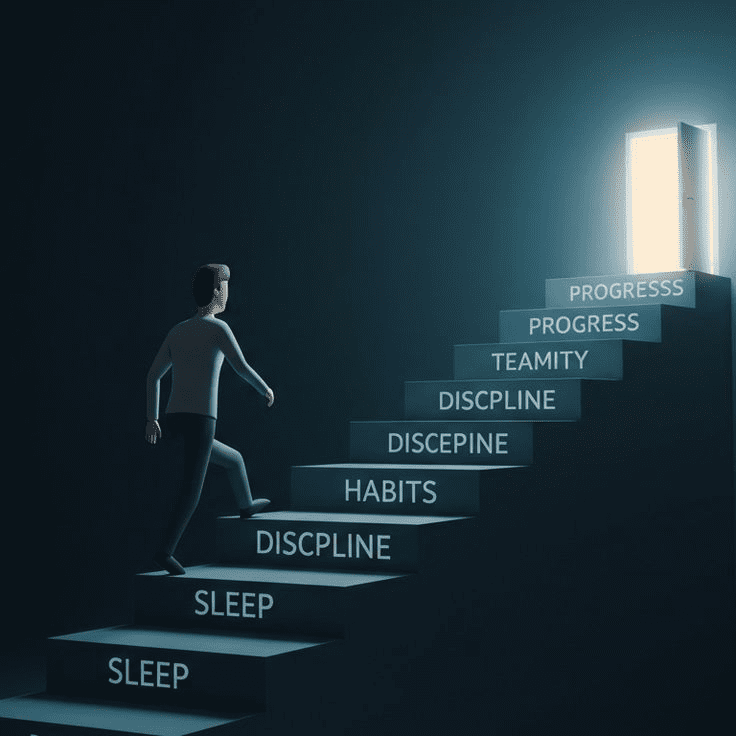
This is why small wins matter so much for how to get motivated every day. A checked box, a finished paragraph, a 20-minute session, a completed walk, or one consistent week may look small, but it changes how you see yourself.
Small wins say:
- I can start
- I can continue
- I am not as stuck as I thought
- progress is possible
- this effort is real
Confidence grows faster from evidence than from positive thinking alone.
Create a Better Morning Start
Morning routines are not magic, but they do influence the tone of the day. Asana’s guidance on building a better morning routine highlights practical habits such as sleeping enough, preparing the night before, drinking water, moving your body, and planning what matters first.
That matters because mornings are often where the day either gains direction or loses it. If you wake up and instantly start scrolling, reacting, and drifting, your energy gets scattered. If you wake up and move into a simple sequence, motivation has a better chance to show up.
A useful morning does not need to be dramatic. It can be simple:
A realistic morning routine
- Get out of bed on time
- Drink water
- Wash up and get dressed
- Avoid long phone scrolling
- Look at your top priority
- Begin one small useful action
That is enough. You do not need an elaborate ritual. You need a start that lowers confusion.
Do Not Wait to Feel Ready
This is one of the hardest but most valuable lessons in how to get motivated every day: readiness is overrated. A lot of people stay stuck because they keep waiting for the right mood, the right mindset, the right Monday, or the right burst of energy.
But real progress often begins before you feel fully ready.
You may feel uncertain and still start.
You may feel tired and still do ten minutes.
You may feel doubtful and still take one step.
Waiting for complete readiness often becomes a hidden form of procrastination. Starting before you feel perfect builds strength much faster.
Protect Your Attention From Daily Damage
Motivation struggles are often really attention struggles. If your focus is broken all day by alerts, messages, noise, and random switching, your work begins to feel heavier than it actually is.
Todoist’s productivity guidance repeatedly emphasizes planning, reducing distraction, and using your day more intentionally rather than letting reactive tasks take over. Asana also recommends reducing low-value busywork so people can spend more time on meaningful tasks.
This matters because how to get motivated every day becomes much easier when your brain is not constantly being interrupted.
Simple ways to protect attention
- Turn off non-essential notifications
- Keep your phone away during focus time
- Use one task list instead of many loose notes
- Close tabs you do not need
- Check messages at specific times
- Work in a cleaner, calmer space
A distracted day often feels like a demotivating day. Sometimes the fix is not more inspiration. It is less noise.
Plan Your Day Before It Slips Away
Todoist’s planning guidance recommends building your daily list around your larger goals more-productive, looking at your week as a whole, and not letting only urgent tasks define the day. That is useful because one major cause of low motivation is drifting.
When you do not know exactly what matters today, everything competes for your attention. Then even small decisions feel tiring.
A better system for how to get motivated every day is to decide the day before the day decides for you.
Plan with these three questions
- What must get done?
- What matters most?
- What is the first step I will take?
Those questions create direction. And direction reduces resistance.
Use Your Energy Better
Time matters, but energy matters just as much. Todoist’s daily scheduling guidance recommends shaping your schedule around your peak, trough, and rebound times rather than pretending every hour feels the same.
This is a major piece of how to get motivated every day. If you keep trying to do your hardest work when your mind is already drained, motivation will feel weak even if the goal matters.
Notice:
- when your mind feels sharpest
- when you feel most restless
- when your energy usually dips
- what time of day you do your best thinking
Then use that information. Put important tasks where your energy is strongest. Save easier tasks for lower-energy periods.
That one shift can make you feel far less “lazy” and much more capable.
Track Progress So Your Brain Can See It
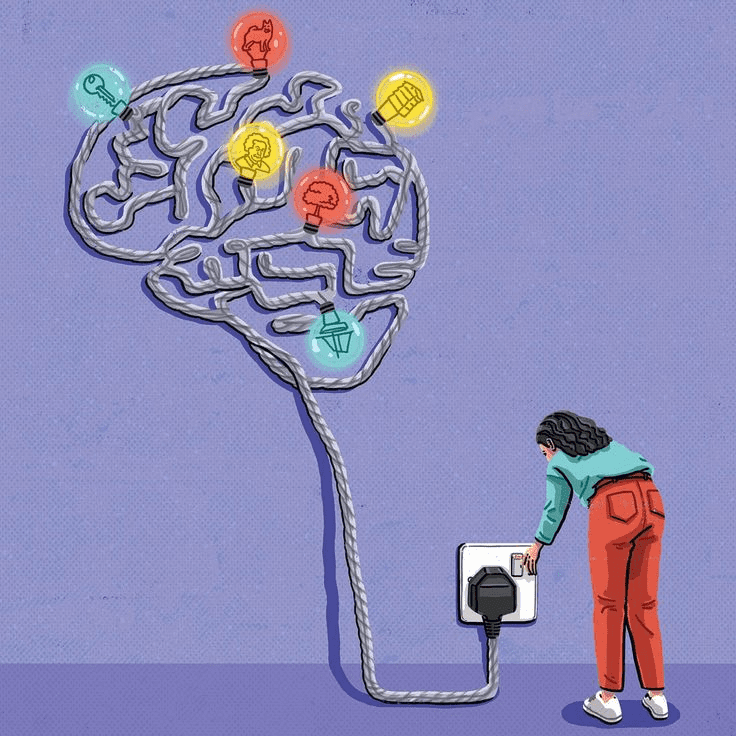
Coursera recommends tracking progress as a practical self-motivation tool. This works because visible progress keeps effort from feeling invisible.
If you are trying to improve how to get motivated every day, use a simple tracking method:
- mark a calendar
- keep a habit streak
- use a checklist
- note one win per day
- record sessions completed
Progress tracking does not need to be fancy. It needs to be visible enough that your mind can register movement.
When progress stays invisible, motivation fades faster. When progress becomes visible, continuing feels more logical.
Reward the Right Things
Coursera also recommends rewarding small wins, not just final outcomes. That matters because long goals often take too much time to provide emotional payoff. Small rewards help bridge the gap.
This is useful for how to get motivated every day because your brain responds to reinforcement. If all effort feels like pressure and no effort feels satisfying, consistency gets harder.
Small rewards can be:
- a proper break after a focus session
- tea or coffee after finishing a task
- a short walk
- a favorite show later
- time doing something you enjoy
The point is not to bribe yourself constantly. It is to create a healthier relationship with effort.
Let Accountability Help You
Coursera’s self-motivation advice includes positive peer pressure as one strategy that can help people stay on track. Accountability can be powerful when it is supportive rather than shaming.
For how to get motivated every day, accountability might look like:
- messaging a friend your goal
- doing body doubling or study sessions
- checking in weekly with someone you trust
- joining a focused online work group
- sharing progress with a coach or mentor
A lot of people are more consistent when their effort is witnessed. That does not mean you are weak. It means structure helps.
Make Your Space Less Frustrating
Your environment has a real effect on your behavior. If your workspace is cluttered, uncomfortable, noisy, or mixed with too many distractions, your motivation can drop before the task even begins.
A better environment supports how to get motivated every day by removing unnecessary friction.
Try this:
- keep only essentials in front of you
- prepare materials in advance
- charge your devices before work time
- clean the area where you begin tasks
- make the starting point obvious
Sometimes motivation improves not because your mindset changed, but because your environment stopped fighting you.
Expect Imperfect Days and Keep Going
One of the best ideas in Coursera’s recent self-motivation advice is to plan for imperfection. This is important because people often lose momentum after one bad day, not because the day was terrible, but because they make it mean too much.
They think:
- I missed a day, so I ruined the streak
- I wasted today, so I am back to zero
- I felt low this week, so I must not be serious
That kind of thinking destroys consistency.
A better mindset for how to get motivated every day is:
- bad days happen
- low-energy days happen
- missed sessions happen
- messy weeks happen
The key question is not whether you stayed perfect. It is whether you returned.
Build Habits So You Need Less Motivation
Long-term consistency depends more on habit than on excitement. Todoist’s planning and organization articles emphasize building repeatable structures around goals and tasks instead of relying on memory and mood alone.
This is one of the deepest answers to how to get motivated every day. You do not want to negotiate every action from scratch forever. You want some actions to become normal.
That might mean:
- same wake-up window
- same planning time
- same place for focused work
- same time for walking or exercise
- same shutdown routine at night
Habits reduce friction. And less friction means less waiting around for motivation to appear.

When You Feel Completely Unmotivated
There will be days when none of the big ideas help much. On those days, simplify everything.
Use this sequence:
- Stand up
- Drink water
- Put the phone away
- Pick one tiny task
- Set a 10-minute timer
- Do only that first step
That is enough to restart motion. For many people, how to get motivated every day is not solved by one giant breakthrough. It is solved by returning to small actions faster.
Motivation for Work, Study, and Personal Life
The details change, but the principles stay similar.
For work, clear goals and less busywork matter a lot. Asana’s motivation and productivity resources emphasize connecting effort to outcomes and reducing low-value coordination work.
For study, good habits matter. Coursera’s study-habits guidance recommends quiet study space, taking breaks, setting goals, and using structured practice.
For personal goals, routine and visibility matter most. A simple plan you can repeat will usually beat a dramatic plan you cannot sustain.
A Simple Daily Reset You Can Actually Use
Here is a practical format you can include in the post:
Morning
- get up
- drink water
- avoid scrolling
- review one priority
- begin with a small action
Midday
- protect one focus block
- take a real break
- check progress
- reset your space if needed
Evening
- note one win
- prepare tomorrow’s top task
- reduce clutter
- go to bed at a sensible time
This helps because it gives your days shape without making life feel rigid.
Conclusion
Learning how to get motivated every day is not about becoming someone who feels inspired all the time. It is about becoming someone who knows how to begin, even when the mood is not perfect. Motivation gets stronger when your goals are meaningful, your tasks are small enough to start, your environment supports action, and your routines make consistency easier.
Start with one change. Not ten. Make the first step smaller. Track progress. Protect your attention. Expect imperfect days. Return faster when you slip.

At pixmerce.com, we believe the best motivation advice is the kind you can actually live with. Once you understand how to get motivated every day, you stop chasing a perfect feeling and start building a life where action becomes easier to repeat.
Lorem ipsum dolor sit amet, consectetur adipiscing elit. Ut elit tellus, luctus nec ullamcorper mattis, pulvinar dapibus leo.